

Bengal’s History and Contemporary Relevance – The First Step of Khola Hawa
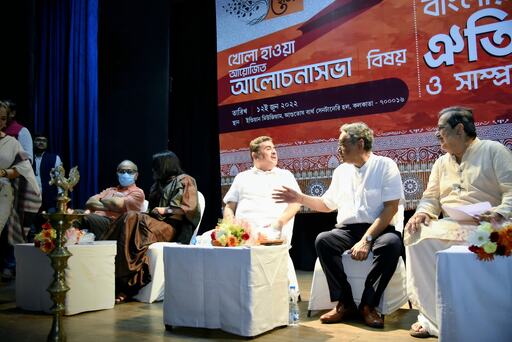
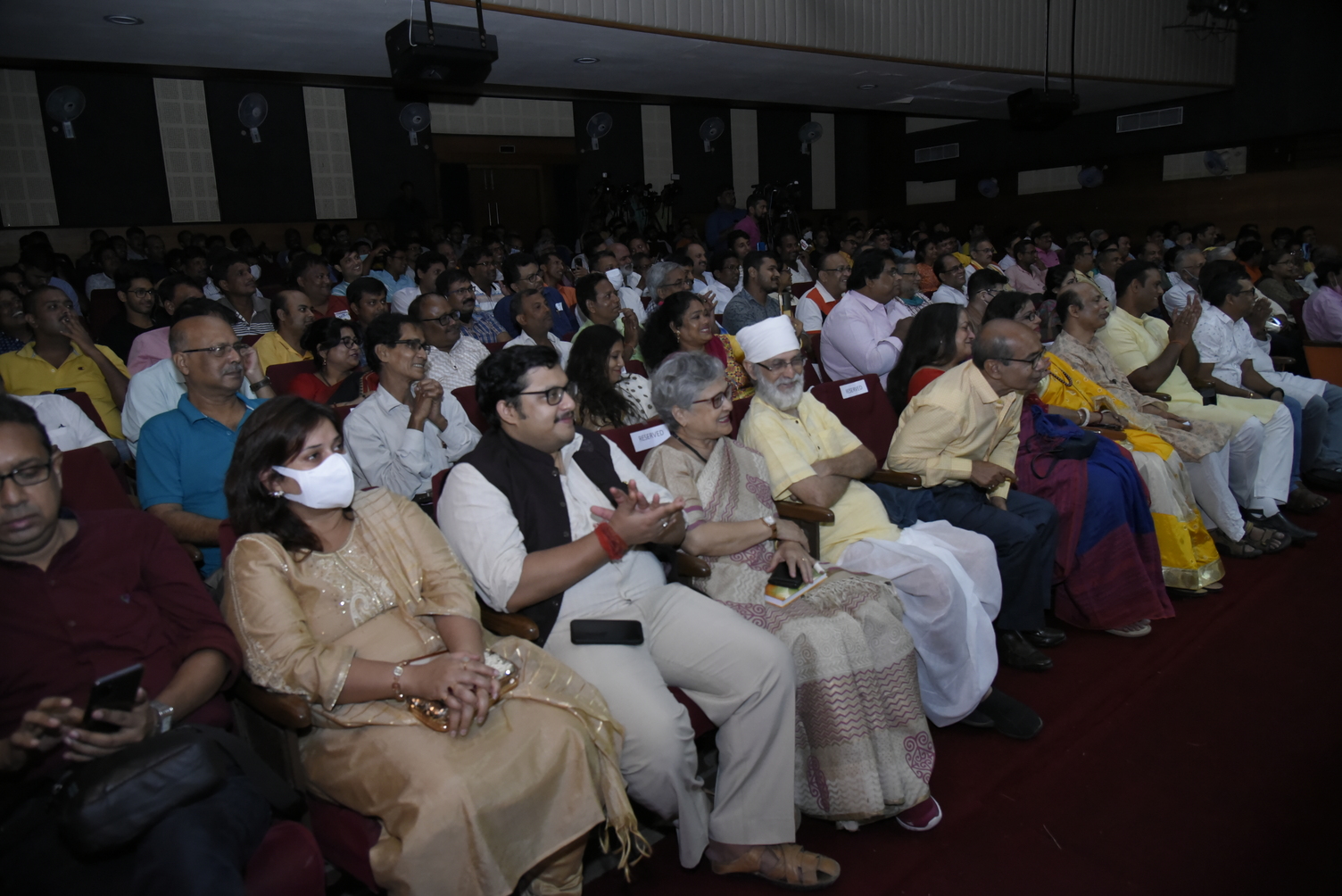
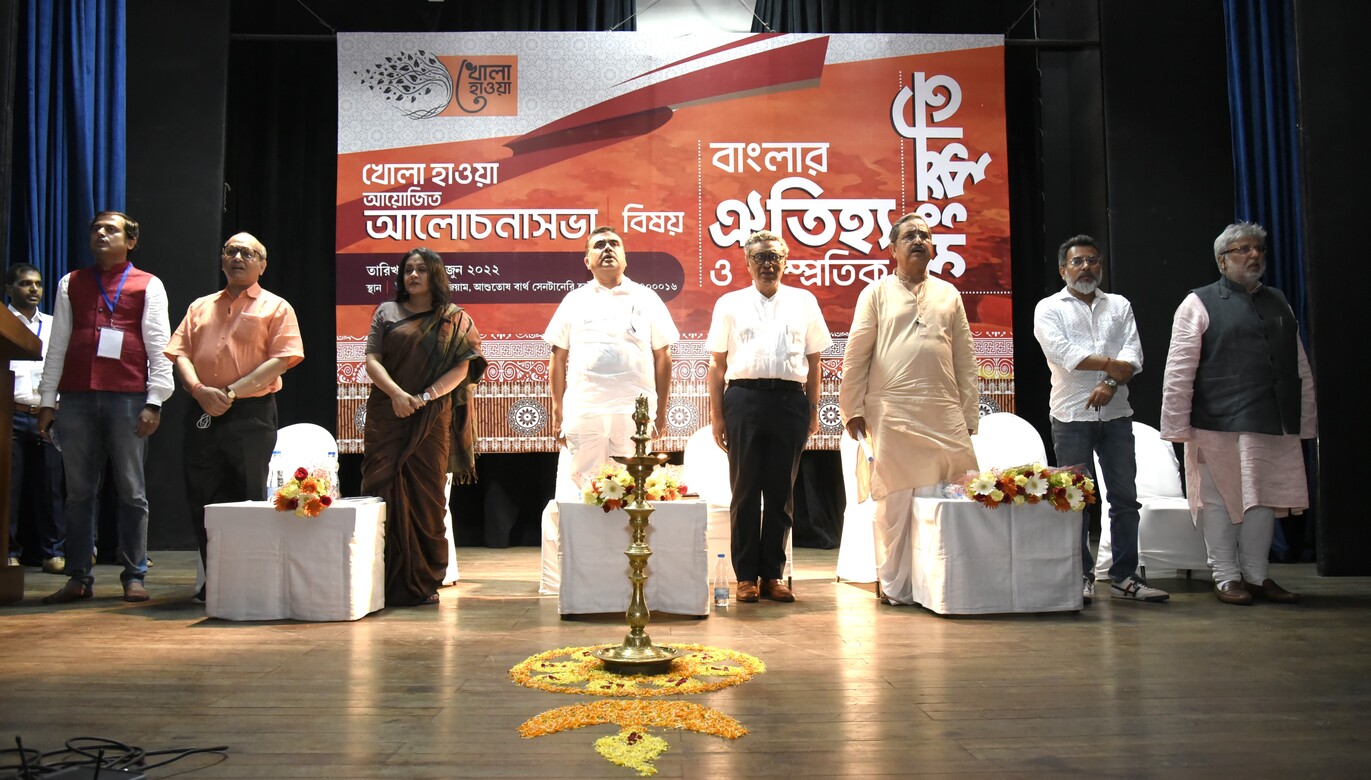
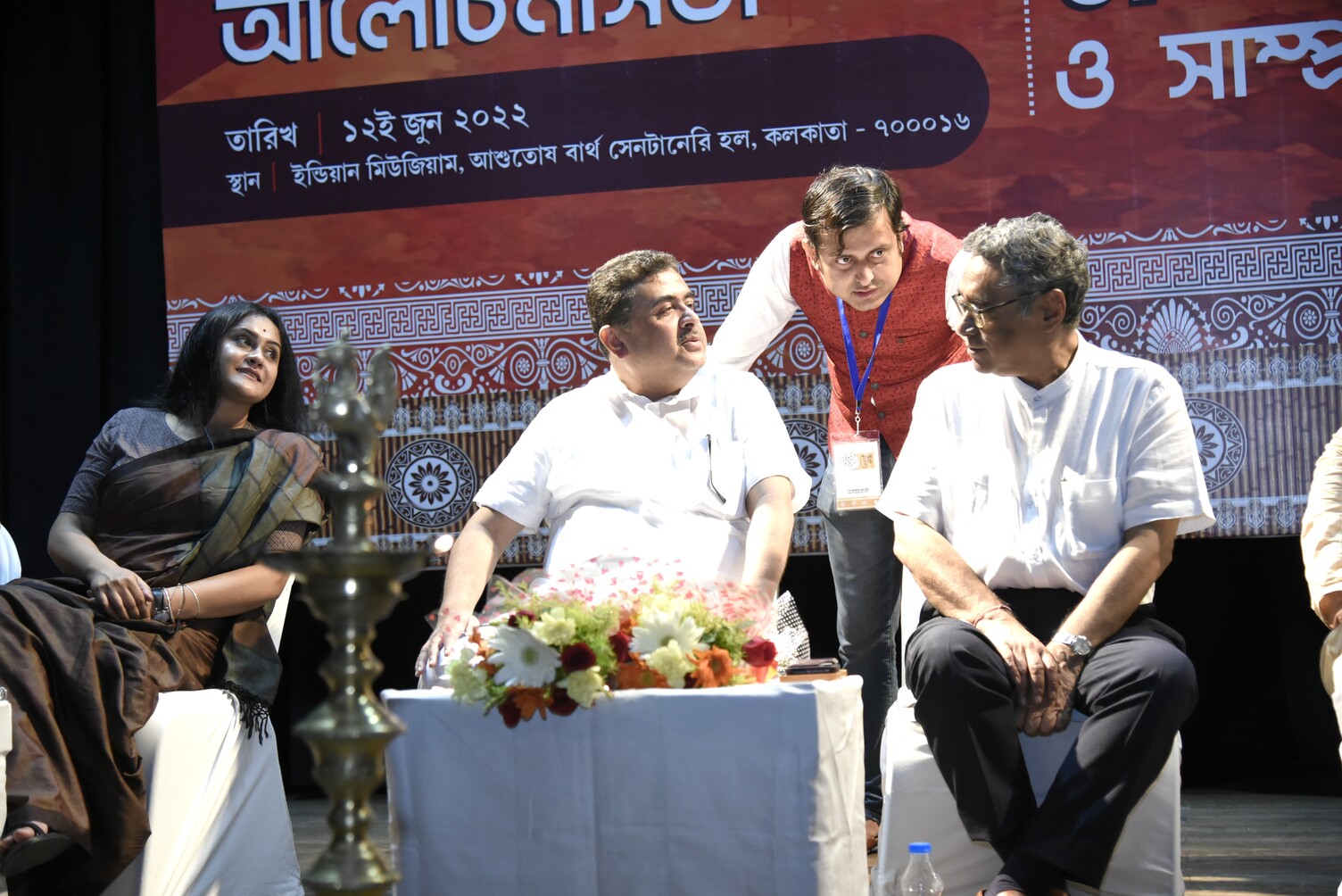
On 12th June 2022, at the historic Indian Museum, Ashutosh Birth Centenary Hall, Kolkata, Khola Hawa—a newly formed socio-cultural organisation—hosted its first-ever event, a distinguished discussion on “Bengal’s Rich Cultural History and Contemporary Relevance.” The evening marked the beginning of a cultural and intellectual journey aimed at reviving Bengal’s ancient spirit and Indic heritage.
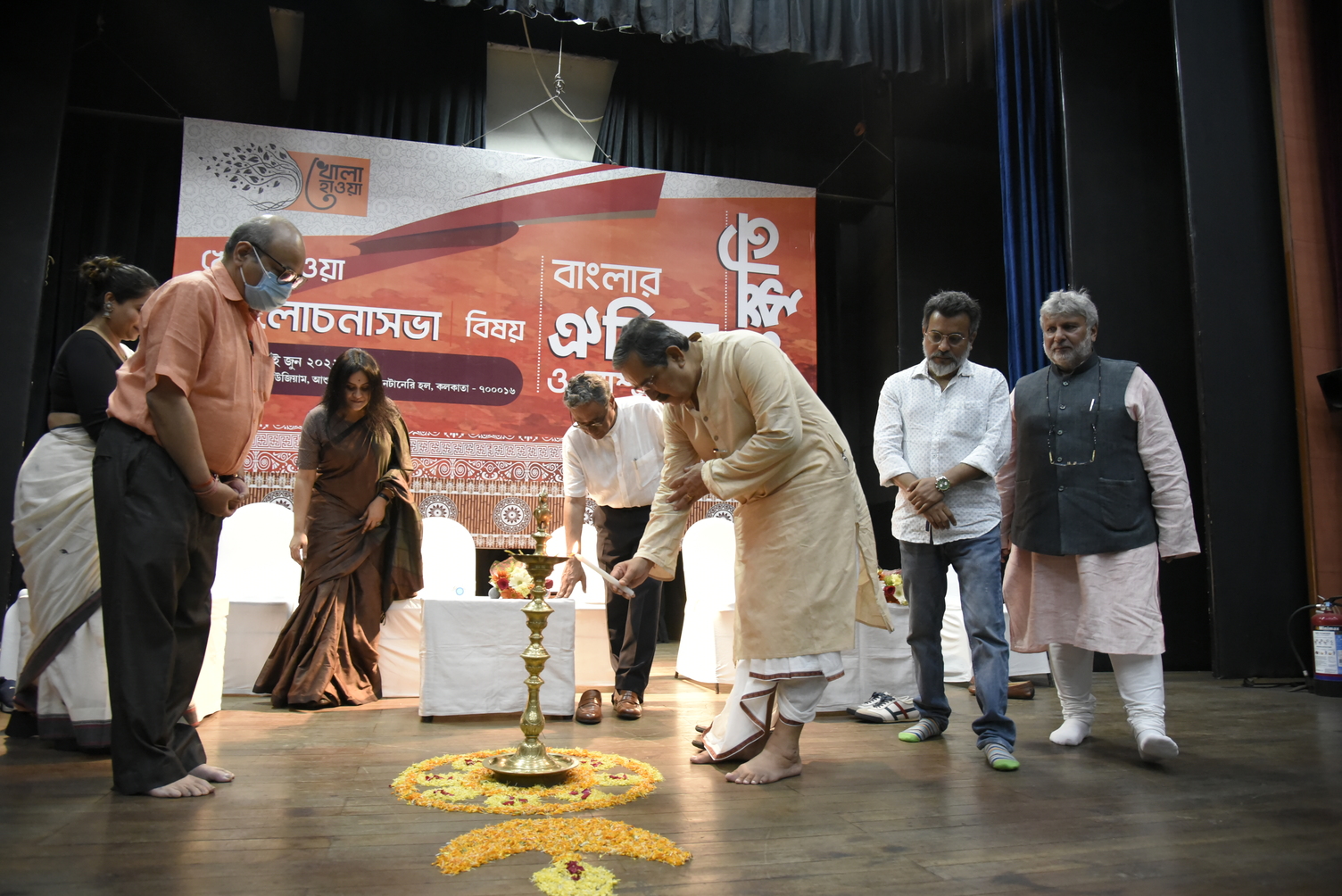
The programme commenced with the lighting of the ceremonial lamp, by respected dignitaries like Shri Shuvendu Adhikari, Dr. Swapan Dasgupta, Dr. Ashok Lahiri, Shri Shishir Kumar Bajoria and Dr. Swaroop Prasad Ghosh symbolising the dispelling of darkness and the awakening of wisdom. This was followed by a felicitation ceremony, where eminent speakers and dignitaries were warmly welcomed with tokens of respect. Khola Hawa also presented mementos of appreciation to the guests, honouring their contributions to the fields of politics, scholarship, economics, and social thought.
The discussion session that followed witnessed the participation of prominent figures.Shri Shuvendu Adhikari, Hon’ble Leader of Opposition in the West Bengal Legislative Assembly, spoke with conviction on Bengal’s cultural identity and the urgent need to preserve it. Dr. Swapan Dasgupta, former Member of Parliament (Rajya Sabha), Padmabhushan awardee, and founder of the organization, traced the civilizational continuity of Indic culture. Dr. Ashok Lahiri, eminent economist and former Chief Economic Adviser to the Government of India, reflected on how Bengal’s cultural decline often paralleled its economic stagnation. Shishir Bajoria, industrialist and Secretary of Khola Hawa, articulated the vision behind the organisation, highlighting its mission of cultural revival. Adding further insights in academic through the lense of societal perspective had stressed the importance of civilizational memory in shaping Bengal’s future identity, Dr. Swaroop Prasad Ghosh, Director of the Maulana Abul Kalam Institute of Asian Studies, offered a nuanced academic perspective on Bengal’s historical shifts and the necessity of intellectual resurgence.
The heart of the evening resonated with a common vision:
“The Bengal that was once a seat of wisdom, where the spirit of Chandi Mangal, Vaishnava devotion, and Baul mysticism flowed together—must rise again.”
The discussion reminded the audience that Bengal was once the intellectual hub of India, where the saying “What Bengal thinks today, India thinks tomorrow” was not a mere slogan but a lived reality. From the mystical verses of the Charyapada (8th–12th century), to the devotional richness of the Vaishnava Padavali, from the epic narratives of the Mangalkavyas to the free-spirited philosophy of the Baul songs—Bengal shaped not only its own cultural identity but also the imagination of the entire nation.
Beyond cultural revival, the speakers also reflected on Bengal’s present challenges. They emphasised that to truly rebuild Sonar Bangla, it is imperative to free West Bengal from the shackles of corruption and stagnation. Only by restoring integrity in public life, reviving the State’s glorious history, and nurturing its cultural soul can Bengal reclaim its rightful place as a beacon of knowledge, creativity, and progress.
The programme concluded with a vote of thanks, where Khola Hawa reaffirmed its pledge to continue this journey. Though this was only the first step, the organisation declared its commitment to building a vibrant platform for dialogue, cultural rejuvenation, and intellectual awakening—so that Bengal’s timeless heritage, freed from the distortions of the present, may once again inspire the world.