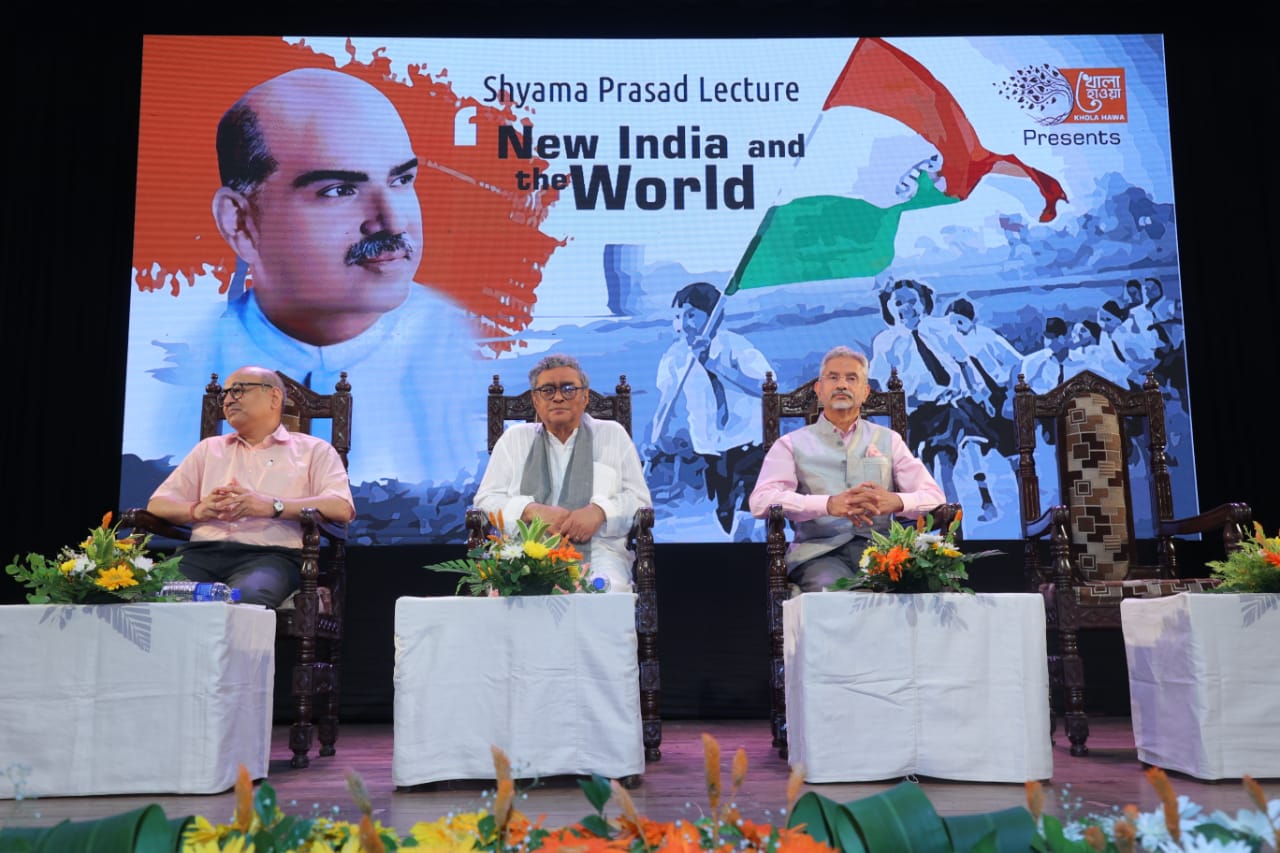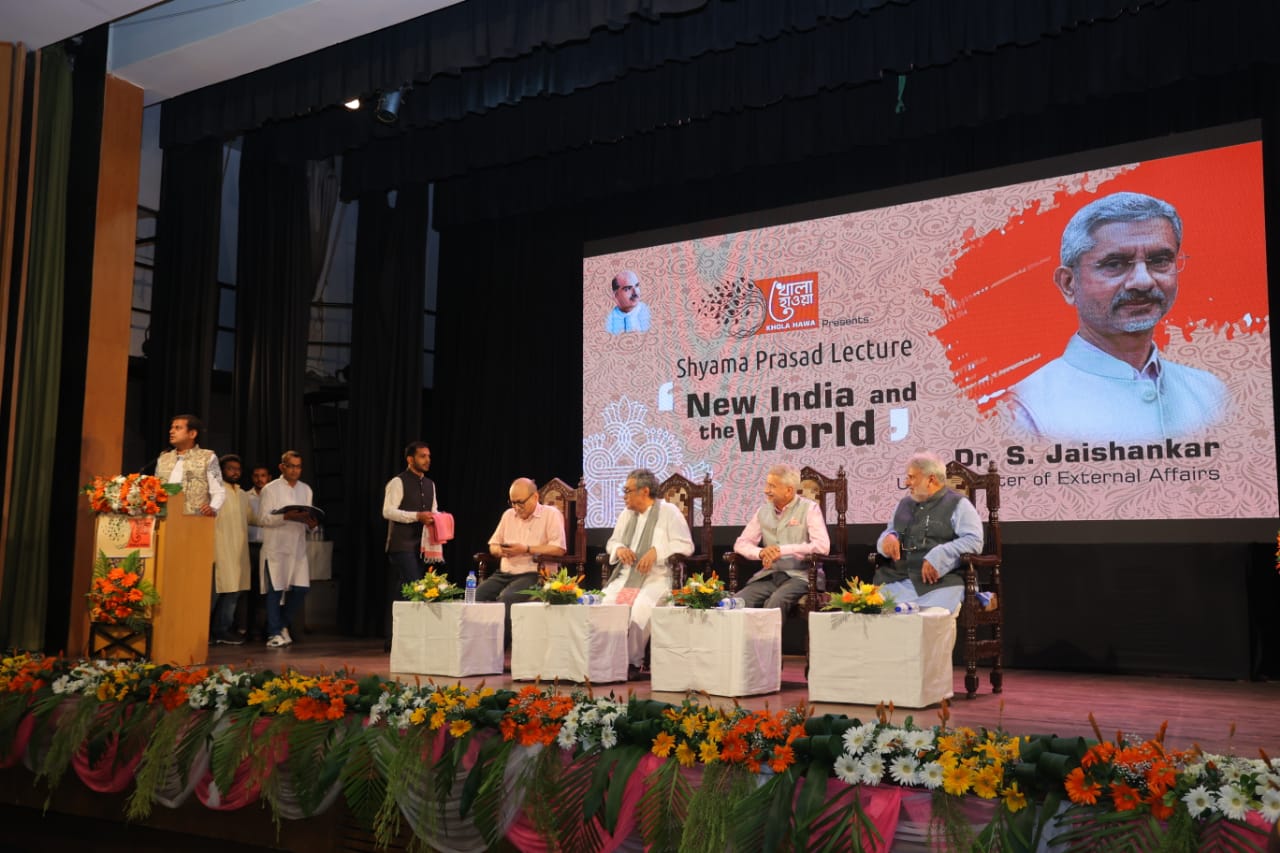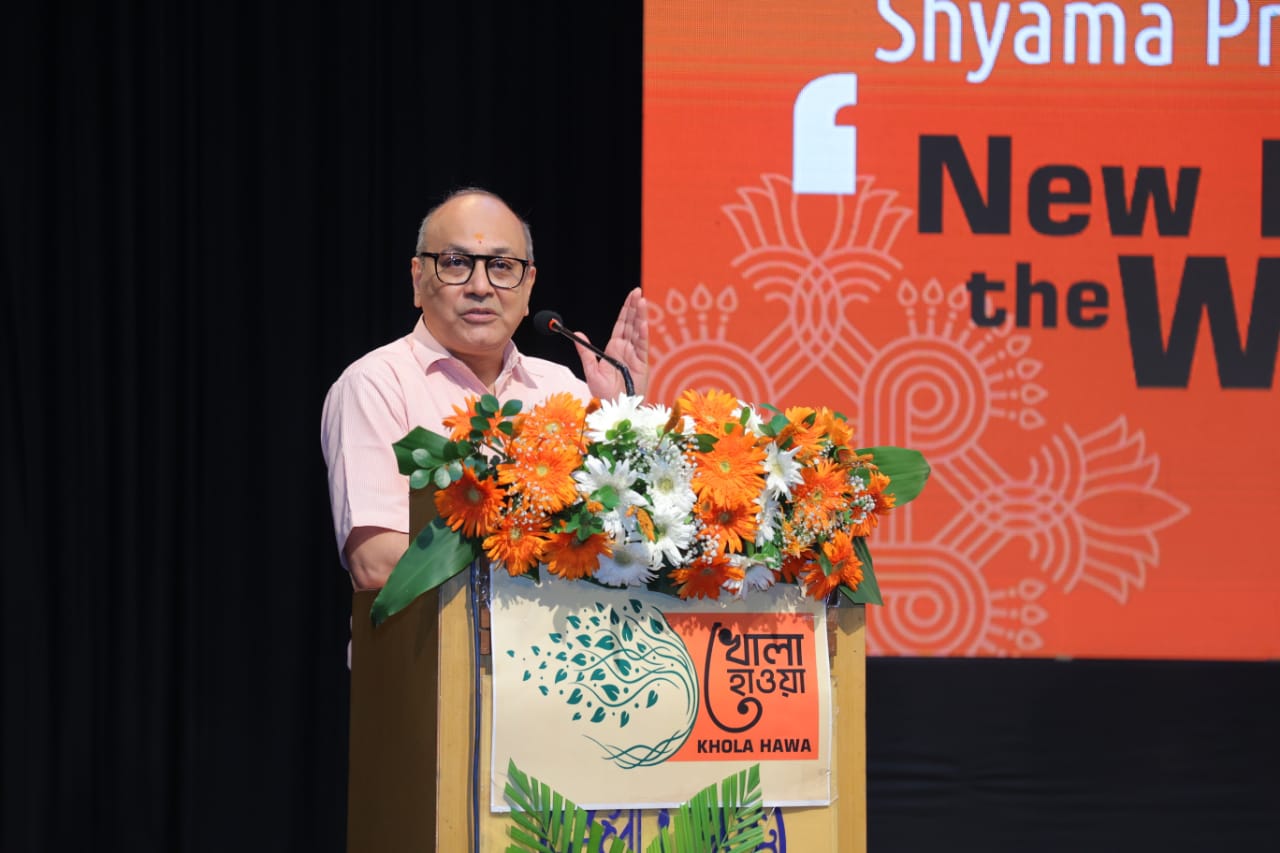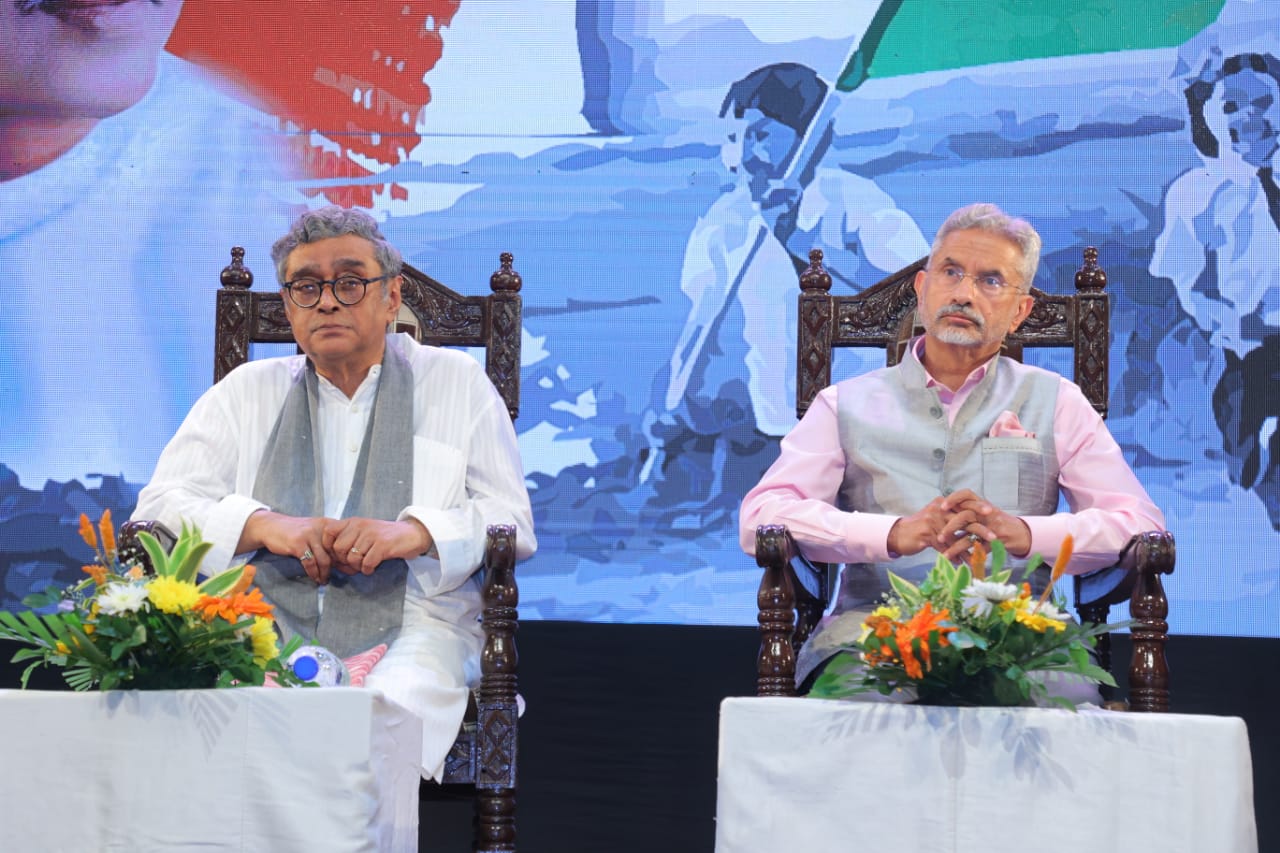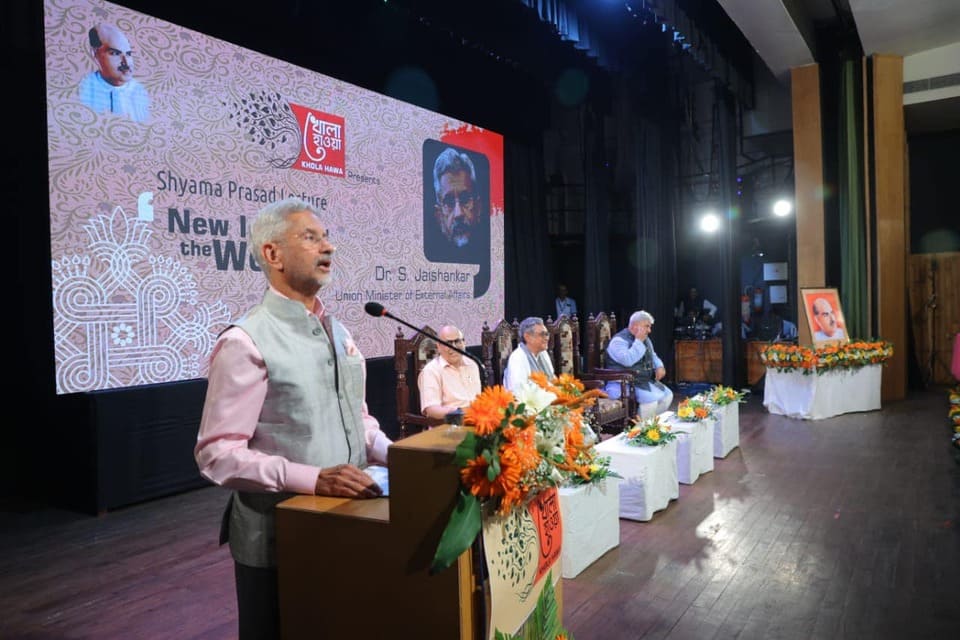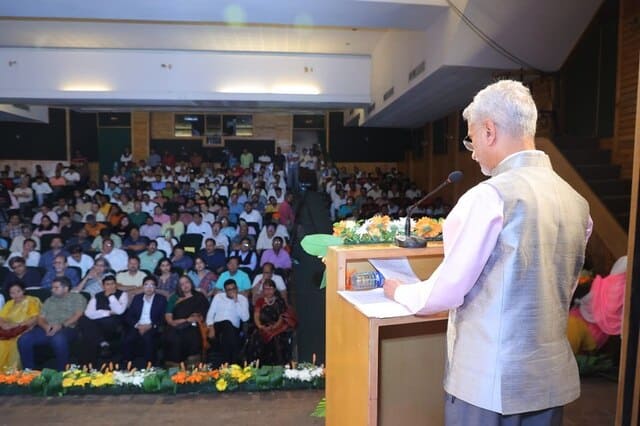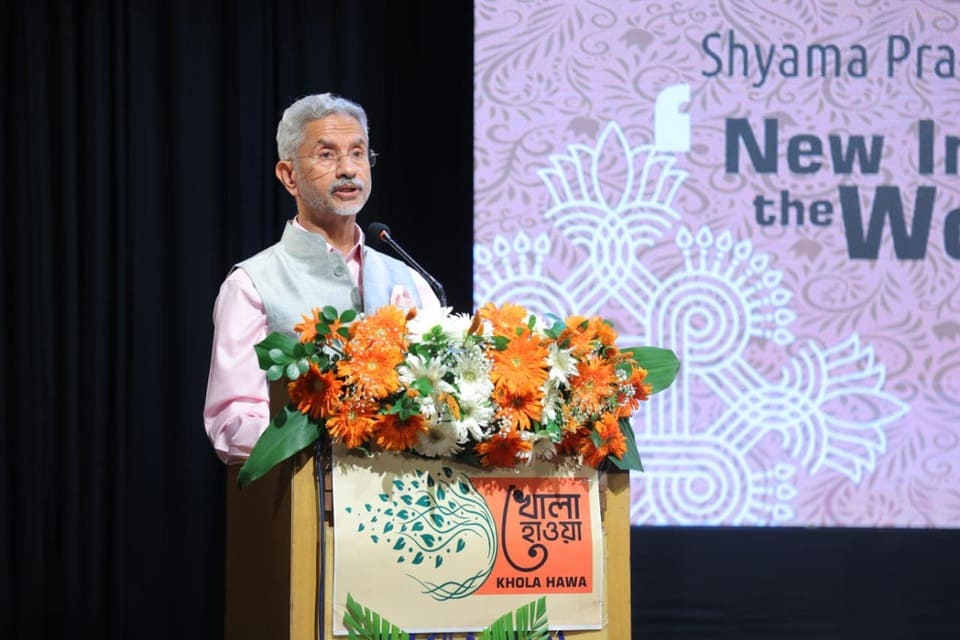


Kolkata, 30th June 2023 — Khola Hawa, a socio-cultural organisation, hosted a landmark intellectual engagement at the Satyajit Ray Auditorium, ICCR, Kolkata, featuring India’s External Affairs Minister Dr. S. Jaishankar, who delivered a comprehensive address on Indian foreign policy, national security, and cultural identity. The event, titled “New India and the World,” brought together eminent personalities including Dr. Swarup Prasad Ghosh, Director of the Maulana Abul Kalam Institute of Asian Studies. The session was chaired by Dr. Swapan Dasgupta, veteran journalist, Padma Bhushan awardee, former Rajya Sabha MP, and President of Khola Hawa.
The programme opened with reflections on the visionary contributions of Dr. Syama Prasad Mukherjee, with Dr. Jaishankar acknowledging his profound influence on India’s political and cultural integration. He credited Dr. Mukherjee’s foresight in identifying post-independence challenges such as Pakistan’s aggression, the Jammu and Kashmir dispute, and the preservation of India’s civilizational identity.
Dr. Jaishankar underlined the historical mismanagement of the Jammu and Kashmir issue, emphasizing that early decisions invited unwanted international involvement. He affirmed that the abrogation of Article 370 in 2019 marked a decisive correction, enhancing national integrity and stability. He categorically rejected the narrative of equivalence between India and Pakistan on terrorism, asserting India’s firm policy against cross-border terrorism and its advocacy in international forums.
Addressing global diplomacy, Dr. Jaishankar highlighted India’s commitment to strategic autonomy. He explained the nation’s balancing act in relations with major powers such as the United States, Russia, and China. “India’s foreign policy is not about aligning with blocs, but about advancing national interests with clarity and conviction,” he stated.
The minister also emphasized the Modi government’s efforts toward industrial and technological self-reliance, citing policies like ‘Make in India’ and ‘Atmanirbhar Bharat’. According to him, economic resilience and defense indigenization are crucial pillars of a strong foreign policy.
A significant portion of the address was devoted to India’s cultural diplomacy. Dr. Jaishankar spoke passionately about the revival of India’s Buddhist heritage and the importance of articulating India’s civilizational values in global discourse. He urged greater narrative sovereignty, warning against the risks of ideological misrepresentation and external distortion of Indian realities.
The keynote was followed by an interactive Q&A session, where Dr. Jaishankar engaged on key topics such as India’s evolving China policy, its positioning in global conflicts like the Russia-Ukraine war, diaspora engagement, rupee internationalization, and strategic partnerships such as the Quad.
In his chair’s address, Dr. Swapan Dasgupta observed that Dr. Jaishankar’s vision was not merely a policy roadmap but a civilizational articulation of India’s place in the world. He stressed that India’s foreign policy under the present dispensation represents a rare blend of pragmatism and cultural rootedness, thereby bridging the gap between global strategy and national ethos.
Dr. Swarup Prasad Ghosh, in his remarks, highlighted the intellectual continuity between the ideas of Syama Prasad Mukherjee and India’s present foreign policy orientation. He noted that Jaishankar’s emphasis on self-reliance and narrative sovereignty reflects Mukherjee’s original concern for India’s identity and security in a turbulent geopolitical landscape.
The event marked a confluence of historical reflection and strategic foresight, placing India’s foreign policy within the broader framework of national interest, cultural identity, and global leadership. Dr. Jaishankar’s remarks echoed a vision of India as a self-assured nation ready to engage the world on its own terms—rooted in history, driven by national priorities, and open to partnerships that respect its sovereignty and values.